


 All categories
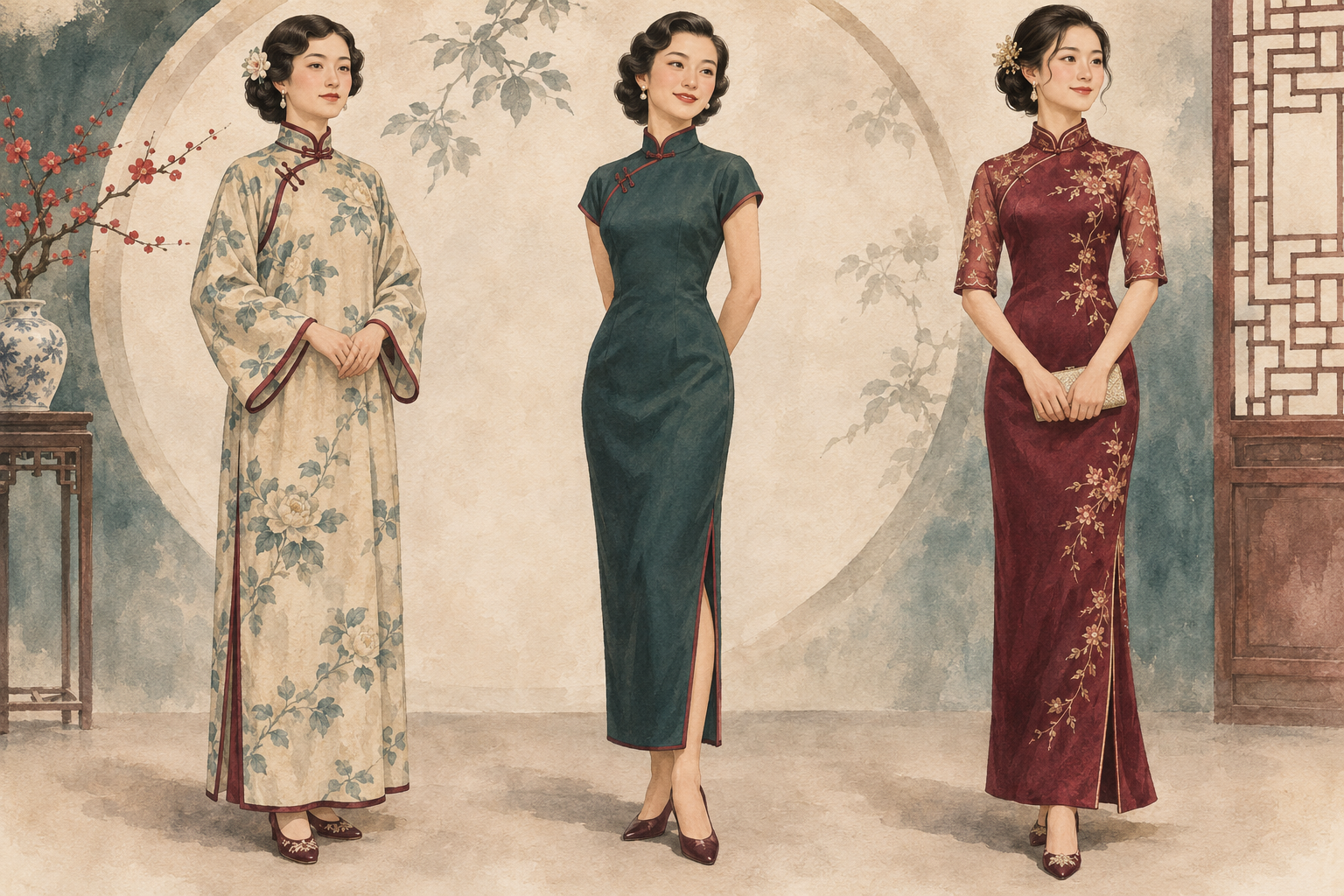
The qipao has never had just one shape. Over the twentieth century, its length, sleeve, waist, slit, and fabric changed with the people and places that wore it. A loose early dress and a tailored reception qipao can both belong to this evolving fashion history. Knowing that helps you avoid buying a “vintage-style” label without checking what the garment actually looks and feels like.
This is a short guide to the changes that matter to a present-day wearer. It draws on museum histories, while treating today’s occasionwear as a modern choice rather than a faithful copy of any one decade.
From a looser long dress to a changing urban fashion
The Hong Kong Museum of History’s qipao exhibition account describes an early twentieth-century form that was relatively wide and straight, with changes in hem and sleeve length. Fashion in Shanghai in the 1920s and 1930s helped the dress become widely visible, and later silhouettes grew slimmer and shifted again in length and detail. The Museum at FIT presents a 1930s example and describes the qipao as a modern Chinese fashion shaped by more than one influence.
That history matters because “traditional qipao” is too broad to tell you how a modern dress will fit. A straight cut may allow more room at the hips. A shaped waist can create a different outline but needs a more precise size match. A longer skirt may need a slit to walk comfortably; a short dress may suit a casual event but feel wrong for a formal one.
Hong Kong added another important chapter
In Hong Kong, the dress is often called a cheongsam. The Hong Kong Memory collection traces its popularity through the twentieth century, including the influence of tailors who moved from Shanghai. Its materials show that the cheongsam was not only special-occasion clothing: forms of it were also worn in ordinary urban life. Later, cuts and contexts changed again.
A modern wedding or evening qipao may borrow the collar, closure, and silhouette from that history while using contemporary patternmaking, fabric, or lining. Rather than asking whether a dress is “the original style,” ask what period or reference the designer had in mind and what has been adapted for current wear.
How the visible details affect the wearer
| Detail | What can change visually | Practical fit question |
|---|---|---|
| Silhouette | Straight, gently shaped, or close-fitting | What are the finished bust, waist, and hip measurements? |
| Sleeves | Long, elbow, short, or sleeveless | Can you lift your arms and move your shoulders? |
| Hem and side slit | Longer formal line or shorter everyday look | Can you walk, sit, and climb a step comfortably? |
| Collar | Different height and stiffness | Does it sit comfortably at the neck when you sit? |
| Fabric and lining | Crisp, draping, heavy, or light | Does it stretch, breathe, and need special care? |
One detail may improve a photo while making the dress harder to wear for hours. A high slit can help movement but may also change how exposed you feel when seated. A close collar may look polished and still be uncomfortable after dinner. A smooth fabric may photograph beautifully but crease or cling. Test the whole garment for the actual event.
Reading a “vintage-style” product listing
Look for a named reference and a clear explanation of which elements are borrowed. If a seller says “1930s-inspired,” do the photos show the hem, sleeves, and cut from several angles? Is the fabric comparable in weight to what the photo suggests, or is it a modern stretch blend? Is the dress custom made, made to order, or ready to ship? These details matter more than a decade label added for search traffic.
If you want an historically informed look, compare the listing with museum examples. If you want a comfortable dress for a wedding or holiday party, prioritize fit and movement while appreciating the historical cues. Our first-qipao guide helps match a dress to an occasion, and our size guide explains how to use garment measurements.
A try-on that respects both the design and your day
- Put on the shoes and undergarments you plan to use.
- Close the dress fully; check whether the front pulls or gaps at the bust and waist.
- Sit for several minutes, stand, take a long step, and raise your arms.
- Inspect the back and side seams in a mirror or photograph.
- Note any alteration needed and whether the fabric or trim allows it.
Do this well before a dated occasion. A qipao is most enjoyable when its shape and your movement work together.
Frequently asked questions
Was the qipao always a tight evening dress?
No. Museum histories document looser and more everyday versions as well as later tailored forms. Today’s evening styles are one part of the dress’s story.
Does a modern zip make a qipao less valid?
Modern construction can make a garment easier to wear. If the exact historical method matters to you, ask the maker to describe the closures and references. For an event purchase, judge the full design and fit.
Can I wear a qipao beyond a wedding?
Yes. Fabric, decoration, and cut can suit dinners, celebrations, cultural events, or more regular wear. Choose with the venue, dress code, and comfort in mind.

