All categories
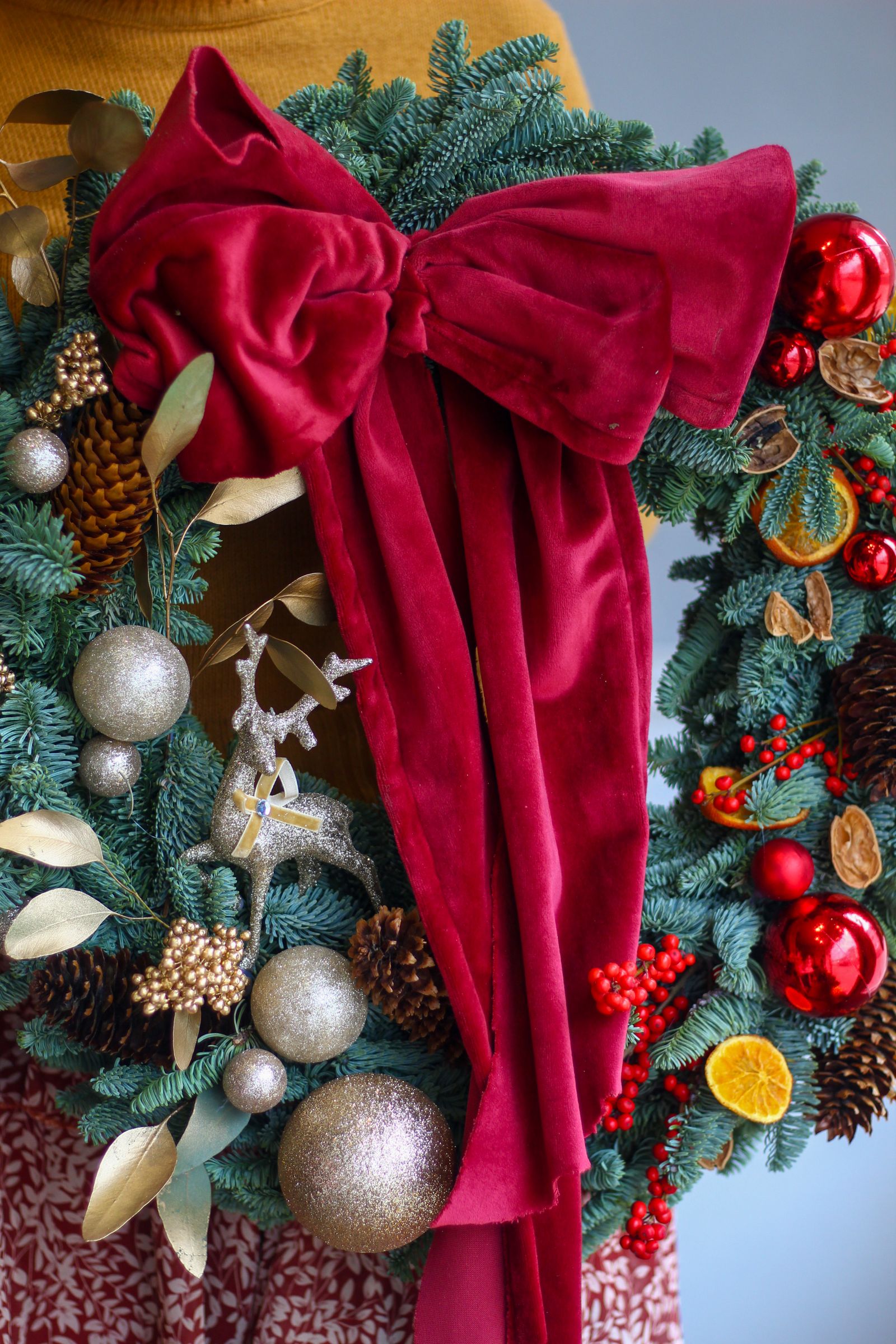
Cover photograph: Ioana Motoc / Pexels, Pexels License. Editorial photograph; pictured items are not Thread & Fest products.
A velvet bow can make a wreath feel finished or give a small tree a clear focal point. It can also disappear into dense greenery or look oversized on a narrow garland. Before choosing a color, decide where the bow will go, how it will attach and whether the display is indoors. Those three decisions matter more than the number of bows in a pack.
Start with the surface you are decorating
On a wreath, step back to the distance from which guests will see it. A bow meant to be the main focal point should remain visible against the greenery without covering the whole ring. A smaller bow works better as one detail among ornaments, dried fruit or lights. The wreath in our cover photo has one prominent velvet bow; it is an example of a focal-point placement, not a size chart for every door.
On a garland, look for natural points where the greenery changes direction: a mantel corner, the top of a doorway or the end of a stair section. Bows can hide a joining point, but avoid placing a bulky knot where it will be crushed by a door or brushed by people passing. A tree usually needs a different rhythm. Decide whether you want one large topper-style bow, a few medium bows spaced through the branches or many smaller accents. Lay them out before fastening them so one side does not become visually heavy.
For a gift, the bow should not block the recipient’s name, a handle or the opening of the bag. If you are pairing a bow with a Christmas gift bag, check the bag’s actual dimensions first. Our gift-bag size guide starts with the contents rather than the printed design.
Judge size in context
Product photos often show a bow in close-up, which makes it hard to judge scale. Read the stated width from loop to loop and the tail length separately. A long tail can be beautiful on a wreath but drag across a tabletop or cover another decoration. If the listing gives ribbon width rather than finished bow width, you still need to know how many loops it has and how tightly they are shaped.
An easy home check is to cut a rectangle of scrap paper roughly as wide as the listed bow and hold it in the intended spot. Step back and photograph the full wreath, tree or mantel. This does not perfectly predict the bow’s volume, but it catches the most obvious proportion mistakes before you buy several. For a small apartment display, one well-placed bow often reads more clearly than many tightly packed bows.
Pre-tied bow or ribbon roll?
A pre-tied bow saves time when you need consistent shapes across a tree or several chairs. Check how it attaches: a wire, tie, clip and adhesive backing work differently. A ribbon roll offers more control over loop size and tail length, but you will need time to make and fasten each bow. Wired-edge ribbon can help a bow hold a sculpted shape; soft unwired velvet tends to drape more naturally. Neither is automatically better. Choose the structure that matches the place and the amount of handling it will receive.
Before fastening, gently lift the display or open the door. If the bow turns, slides or catches, change the attachment point. Do not force a wire tightly around fragile greenery, electrical cords or a painted surface. For a rental home, use the display’s own frame or an appropriate removable hanger rather than guessing that tape will release cleanly.
Check weather and lighting
Velvet can look rich indoors under warm light, but an indoor decorative bow should not be assumed suitable for rain, snow or direct sun. If it will stay outside, look for an explicit outdoor-use statement and check how the material, backing and fastener respond to moisture. A sheltered door is different from an exposed gate. Bring indoor-only bows in when the weather turns rather than expecting them to remain pristine through a season.
Photograph the decoration once with the room lights on and once in daylight. Deep red or burgundy velvet may look nearly black in a dark corner; a lighter ribbon or a clearer placement may work better. Keep nearby ornaments from covering the loops. At the end of the season, let the bow dry completely, support the loops with tissue if needed and store it where it will not be flattened.
A quick purchase checklist
Know the intended location, finished width, tail length, attachment type and indoor or outdoor rating. If you need a matching group, check that the pack contains the same size and color rather than mixed variants. Then buy for the display you have measured, not for the close-up photograph on the product page.
Photo context: The cover is a real photograph of a Christmas wreath with a large red velvet bow. It illustrates one placement and is not a Thread & Fest product photograph.