


 All categories
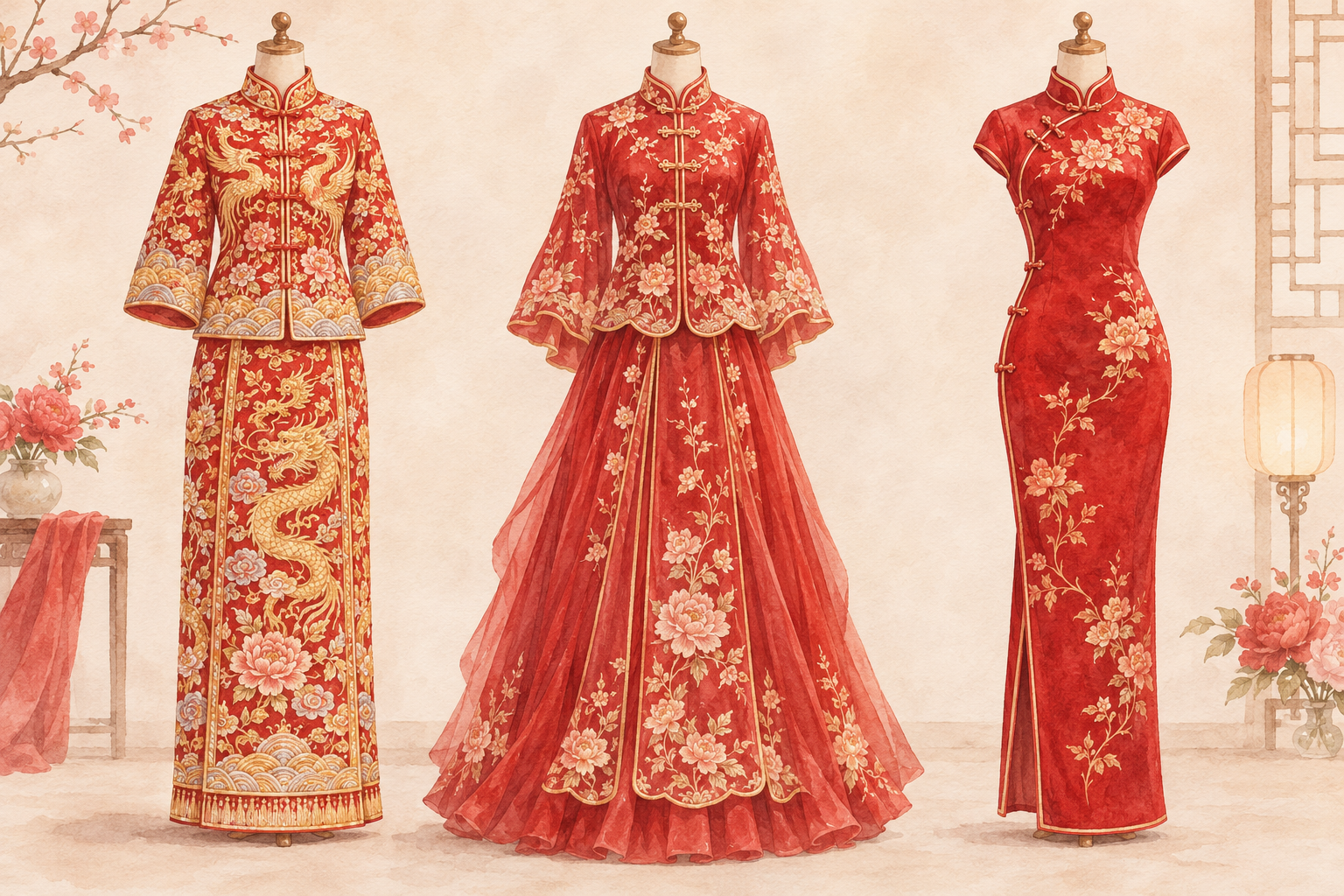
Qun kwa, Xiuhe-style sets, and bridal qipao are three different shopping categories, not three names for the same Chinese wedding outfit. The easiest distinction is construction: a qun kwa is a jacket-and-skirt bridal set with a documented Hong Kong making tradition; a Xiuhe-style listing usually describes a more flowing, contemporary Chinese-inspired two-piece bridal look; a qipao is a one-piece dress. Details vary by maker, so read the exact listing before choosing a look for a tea ceremony or reception.
Families and communities have different wedding customs. Treat the couple’s plans and the advice of their families as the starting point. The garment guide below helps you compare what a seller is actually offering.
Qun kwa: a jacket and skirt with a specific bridal tradition
A qun kwa (also written qun kua or kwan kwa) is a two-piece wedding costume: a jacket above a skirt. The Hong Kong Memory archive describes its use for a bride on her wedding day and the embroidered designs and construction associated with local practice. It also records changes in color, cut, and decoration over time. An archive example is valuable context, but not every ready-made bridal set on a shopping site follows the same construction or level of workmanship.
For an online purchase, ask whether the jacket and skirt are sold together, whether the skirt fastens separately, and how the set is measured. Dense embroidery may add weight and make alterations harder. If the wedding includes kneeling or repeated sitting, test the skirt’s movement and the jacket’s shoulder range well before the day.
Xiuhe-style: check the maker’s definition
“Xiuhe dress” is a common modern retail label for a Chinese-style bridal outfit, often a jacket over a fuller skirt. The exact jacket shape, skirt construction, and amount of embroidery vary. One store may show a flowing skirt with a long jacket; another may use the same name for a different two-piece silhouette. Do not assume that every Xiuhe-style set is a replica of a single historical garment.
Look for a flat-lay photograph and a list naming each piece. Is the skirt a separate garment with a waistband? Are the sleeves easy to move in? Is there an underskirt that creates the volume in the photo, and is it included? If a train or wide hem is shown, think about stairs, narrow spaces, and the distance you will walk during the ceremony.
Bridal qipao: one dress, many possible cuts
A bridal qipao or cheongsam is generally a one-piece dress. It may be red, gold, ivory, or another color chosen for the event and family preferences. The Hong Kong Memory cheongsam collection shows that this dress has evolved through different cuts and contexts, so the word alone does not tell you whether the current item is loose, shaped, long, or short. A qipao can work for a tea ceremony, a reception, or a second outfit, depending on the schedule and dress code.
Because the dress is one piece, bust, waist, and hip fit all have to work together. Check finished measurements, fabric stretch, closure, and slit height. During a try-on, sit, bend slightly to greet relatives, raise your arms, and walk a few steps in your wedding shoes. Our qipao size guide explains how to compare body and garment measurements.
Compare the three before you order
| Outfit | Usual construction | Fit question that matters |
|---|---|---|
| Qun kwa | Jacket plus separate skirt | Can top and skirt be sized or altered independently? |
| Xiuhe-style set | Usually a jacket and fuller skirt, but seller definitions vary | What creates the fullness, and which pieces are included? |
| Bridal qipao | One-piece dress | Do bust, waist, hips, collar, and movement all work together? |
Color and embroidery are important to the look, but they should follow the event plan. Ask the couple or family about preferred colors, the tea ceremony setting, and whether you will change before the reception. If you are a guest, use the invitation and the couple’s guidance; a heavily decorated bridal look may not be suitable for you.
Plan for the actual wedding day
- Write the event order. Note tea ceremony, portraits, travel, dinner, and outfit changes.
- Check the room and weather. Heavy fabric, long hems, and layers feel different in summer heat or a cold outdoor photo session.
- Measure for each piece. Do not rely only on a letter size. Confirm custom versus ready-made sizing and the maker’s alteration policy.
- Leave time. A dated wedding needs shipping, a full try-on, and any tailoring well before the ceremony.
- Practice the movements. Sit, stand, bend, reach, take stairs, and move with the shoes and accessories you will wear.
For a qipao specifically, our first-qipao guide helps narrow fabric and cut. If you are choosing a separate skirt set, the set checklist is a useful reminder to confirm every included item.
Frequently asked questions
Is a Xiuhe-style set the same as a qun kwa?
Not as a reliable shopping rule. Both may be two-piece Chinese bridal looks, but their silhouettes, making traditions, and retail descriptions differ. Ask for construction and included pieces rather than relying on the name.
Can I wear a qipao for the tea ceremony?
Many couples do, but the choice should fit their own family customs and event schedule. Test the dress for sitting and movement, and confirm the outfit plan with the people involved.
Which is easiest to alter?
That depends on seam allowance, fabric, embroidery placement, and the change needed. A two-piece set can sometimes allow separate sizing, while heavy ornament or a fitted one-piece dress can limit alterations. Ask a tailor about the actual garment.

