


 All categories
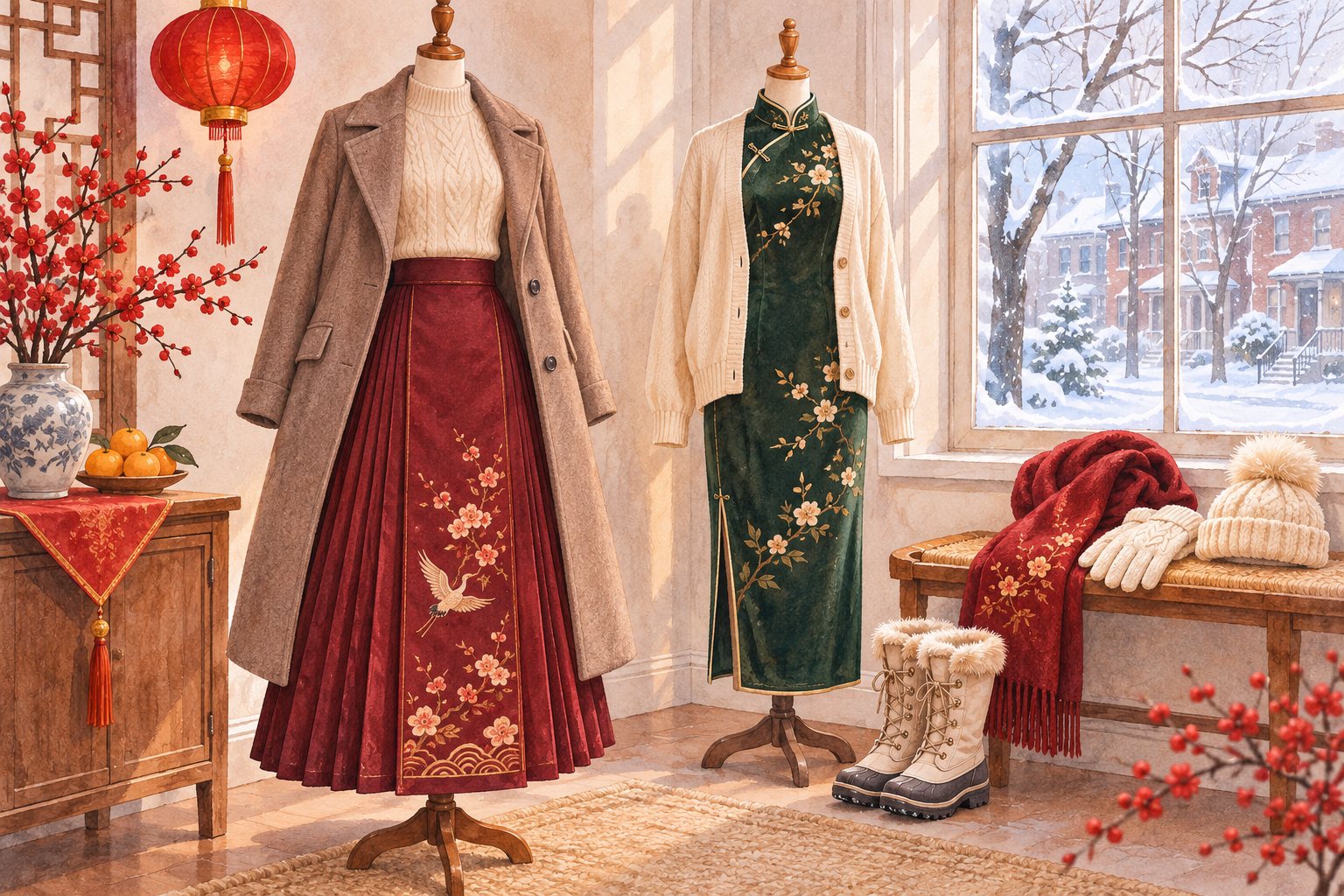
For a Lunar New Year gathering in a cold climate, build an outfit you can adjust between the journey and the warm room. A mamian skirt or qipao can still be part of the look, but your coat, base layer, shoes, and travel conditions should be decided first.
Plan for two temperatures
The outdoor trip and indoor celebration may feel like different seasons. Check the local forecast and how long you will be outside, then ask whether the venue is heated. The US National Weather Service recommends layers of loose, lightweight, warm clothing in cold conditions. Health Canada also stresses layers and a wind-resistant outer layer. Apply that practical approach to your outfit rather than expecting a festive dress alone to keep you warm.
Try the full outfit in two versions: as you will wear it on the journey, and after you remove your coat indoors. If the indoor version is too warm, choose a lighter base layer or a cardigan you can take off. If the outdoor version leaves your legs or feet cold, rethink the underlayer and shoes.
Mamian skirt: room for a base layer
A mamian skirt’s wrap construction may allow tights or a slim thermal layer underneath, but check the actual overlap and how the skirt hangs when layered. A bulky underlayer can change the pleats or make the flat panel stand away from the body. Sit and walk in the complete outfit before the event. Our mamian sizing guide explains why overlap and length matter as much as waist measurement.
Choose footwear for ice, wet pavement, or long walking first; you can change into dress shoes at the venue if the host’s arrangements allow it. A skirt hem that brushes the ground in photos can be a problem in snow or slush. Measure the skirt with the shoes you will actually travel in.
Qipao: layer without losing movement
A fitted qipao may have little room for a thick base layer. Test a thin underlayer with the dress’s collar, sleeves, zipper, and side slit. If it makes the garment pull at the bust or hips, choose a warmer coat rather than forcing extra cloth inside. A long cardigan or tailored jacket can work indoors if the event is less formal; a wrap can be easy to remove at dinner.
Try sitting for the length of a meal. A dress that feels comfortable when standing may become restrictive after adding tights and a slip. Our qipao fit and fabric guide explains why lining and stretch change the experience.
Three outfit plans
A family dinner with a short journey
Wear a comfortable mamian skirt and simple knit or blouse, with tights you have already tested under it. Add an insulated coat and practical shoes for travel. Remove the coat and, if appropriate, change shoes after arriving. Keep the indoor top light enough for a heated room.
A formal restaurant event
Choose a qipao or a dressier mamian outfit that meets the invitation’s dress code. Carry a compact wrap for a cool dining room, and use a winter coat outside. If traveling on foot, pack dress shoes separately rather than walking through bad weather in delicate footwear.
An outdoor parade or fair
Prioritize weather protection and walking comfort. A Chinese-inspired accessory or visible top can express the occasion even if most of the outfit is covered by a coat. Do not sacrifice a warm hat, gloves, or safe shoes just to show the full garment.
Questions that prevent last-minute surprises
- Will the event move between outdoors and indoors?
- Is there a coat check or space to change shoes?
- How much walking and standing is involved?
- Can I remove one layer without changing the whole outfit?
- Does my skirt hem stay clear of wet ground?
People discussing cold outdoor travel and hot indoor rooms often focus on removable layers; those anecdotes reinforce the need to rehearse your own outfit. Cold tolerance and venue conditions vary.
The aim is an outfit that lets you greet people, eat, and move comfortably. If a forecast changes sharply, choose warmth and safe travel over a planned photo look. For an overall comparison of mamian skirt, qipao, and casual options, read our Lunar New Year outfit guide.

