


 All categories
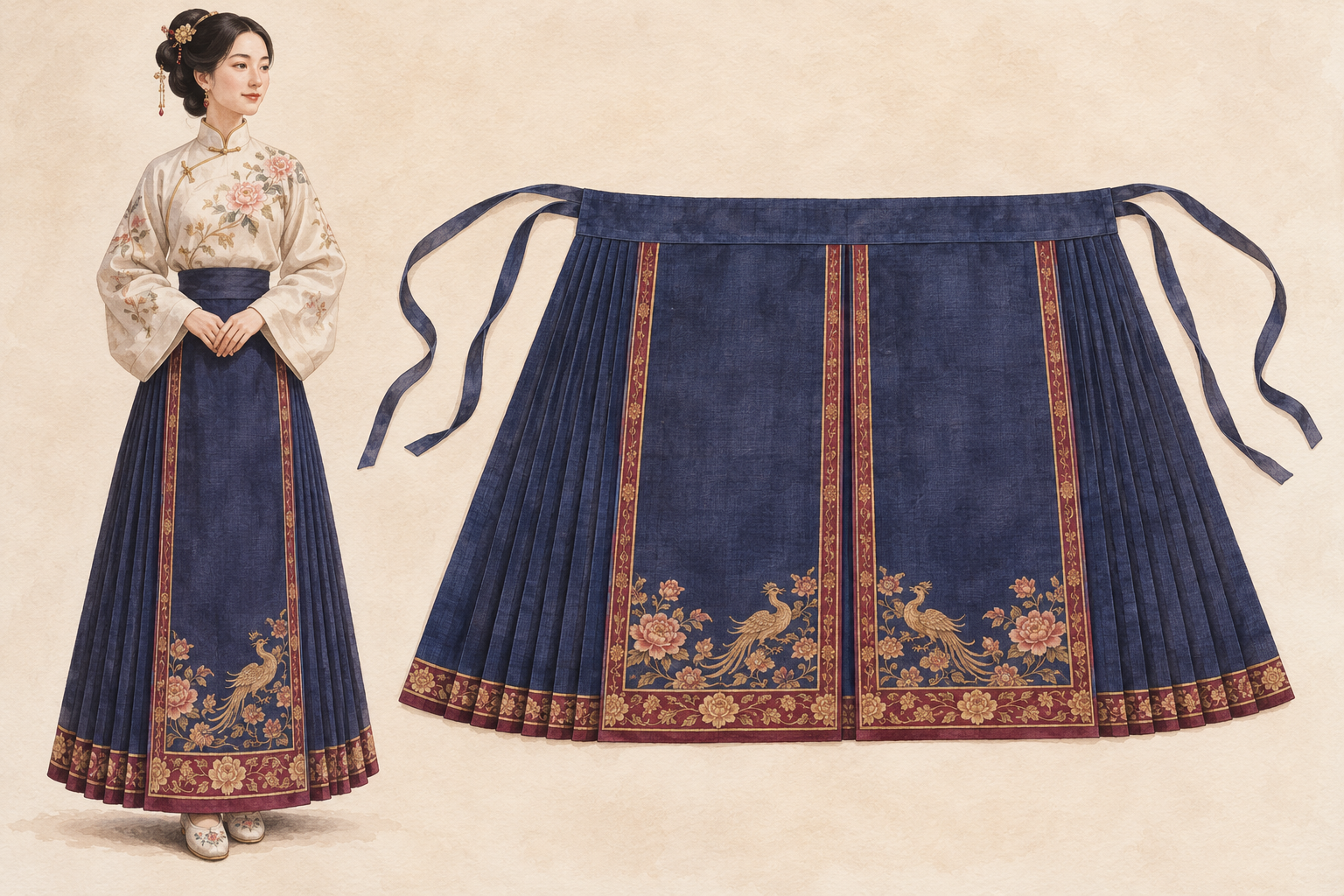
A mamian skirt gets its English nickname, “horse-face skirt,” from its flat rectangular front section, not from a picture of a horse. The Chinese name is mamianqun (马面裙). To recognize the construction, look for a broad, relatively flat panel at the center front, pleats to the sides, a corresponding back panel or overlapping section, and a waistband that wraps and ties.
Modern mamian skirts vary widely in fabric, length, trim, and how much overlap they provide. Understanding the basic anatomy helps you read a listing, choose a size, and wear the skirt without confusing a decorative print with a construction detail.
Why “horse-face”?
The literal translation can sound odd to an English-speaking shopper. In a Metropolitan Museum of Art description of an early twentieth-century Chinese wedding outfit, the skirt is identified as a popular type called the horse-face skirt, with the name referring to the rectangular frontpiece. That museum example pairs the skirt with a jacket; it also shows that a recognizable skirt structure can appear in different historical outfits.
You may encounter other explanations of the name online, including comparisons with architectural forms. Those accounts are not always sourced in the same way. For the shopper’s immediate purpose, the reliable visual clue is the flat front area against the pleated sides. A horse image embroidered on a skirt does not make it a mamian skirt, and a mamian skirt does not need horse imagery.
Read the skirt from the center outward
| Part | What to look for | Why it matters when worn |
|---|---|---|
| Front panel | A broad, flatter section at center front | Displays a border or motif without deep folds interrupting it |
| Side pleats | Folded fabric beside the panel | Adds volume and movement; changes how the skirt falls |
| Back and overlap | A second flat or overlapping section behind | Determines coverage when you turn, sit, or walk |
| Waistband and ties | The band and lengths used to wrap and secure the skirt | Controls where the skirt sits and how much adjustment is possible |
| Border or decoration | Patterning along the hem or panel | Affects the appearance if the skirt is shortened |
Construction is easier to judge in a flat-lay photograph than in a posed image. Ask for the skirt laid open, with the waistband and both sides visible. Then ask for a back view on a person. A front-facing model photograph can hide a narrow overlap or a panel that shifts sideways as the wearer moves.
How the wrap and overlap work
A mamian skirt commonly wraps around the waist and is secured with ties. The flat panels meet or overlap as the skirt is arranged around the body, while the pleats fall toward the sides. There are multiple contemporary construction methods, so follow the seller’s instructions for the specific skirt. The practical test is whether the panels stay aligned and provide the coverage you expect when you turn and take a step.
Waistband length is not the same number as your body waist. The band needs fabric for the wrap and overlap. A size chart may report the whole band length, the recommended body waist range, or a garment measurement taken while laid flat. If the label is unclear, ask which one it means. Our waist versus waistband guide explains how to compare them.
Also check the width and placement of the panel relative to your hips. A skirt may tie around the waist yet pull the flat section off center or show a gap at the back. Our guide for fuller hips lists the questions to ask before ordering.
What changes from one mamian skirt to another?
A contemporary maker may use crisp brocade, lighter woven cloth, subtle everyday colors, or elaborate embroidered borders. Pleats may be deep or shallow; the flat section may look wider or narrower; lengths can run from shorter casual styles to ankle-length formal looks. These choices affect drape, weight, and where a hem can be altered. They do not erase the need to inspect the panel and pleat structure.
If you want a skirt for frequent wear, ask about fabric weight and care. Heavy decoration can make a skirt feel formal and may complicate cleaning or hemming. A plainer fabric may be easier to pair with a shirt, but look at real movement photos if you can: a light skirt can cling or billow differently from a studio image. Our shorter versus ankle-length comparison helps you choose for your plans.
A practical three-photo check
- Front on a person: Is the flat panel centered when the wearer stands naturally?
- Back on a person: Is the overlap sufficient when the wearer turns or takes a step?
- Skirt laid flat: Can you see the ties, waistband, panel width, pleat arrangement, and hem border?
Then check the written information: body waist range, finished skirt length, fabric composition, included pieces, and return or alteration policy. A photographed blouse, underskirt, or decorative belt may be a styling item rather than part of the skirt purchase. If you are choosing your first one, read skirt only versus matching set before checkout.
Frequently asked questions
Do all mamian skirts have the same number of pleats?
No. Pleat spacing and depth can vary among historical examples and modern designs. Look for the underlying contrast between the flat panel and pleated areas rather than an exact pleat count.
Is a mamian skirt always part of a complete hanfu outfit?
No. It can be worn with a coordinated heritage-inspired top or styled with contemporary clothing. A skirt listing should name only the pieces actually supplied.
Can I shorten a skirt with a decorative border?
Sometimes, but an alteration may remove or interrupt the design. Measure from the waist position where you plan to tie the skirt to your preferred hem, then ask a tailor about that specific border before buying.

