All categories
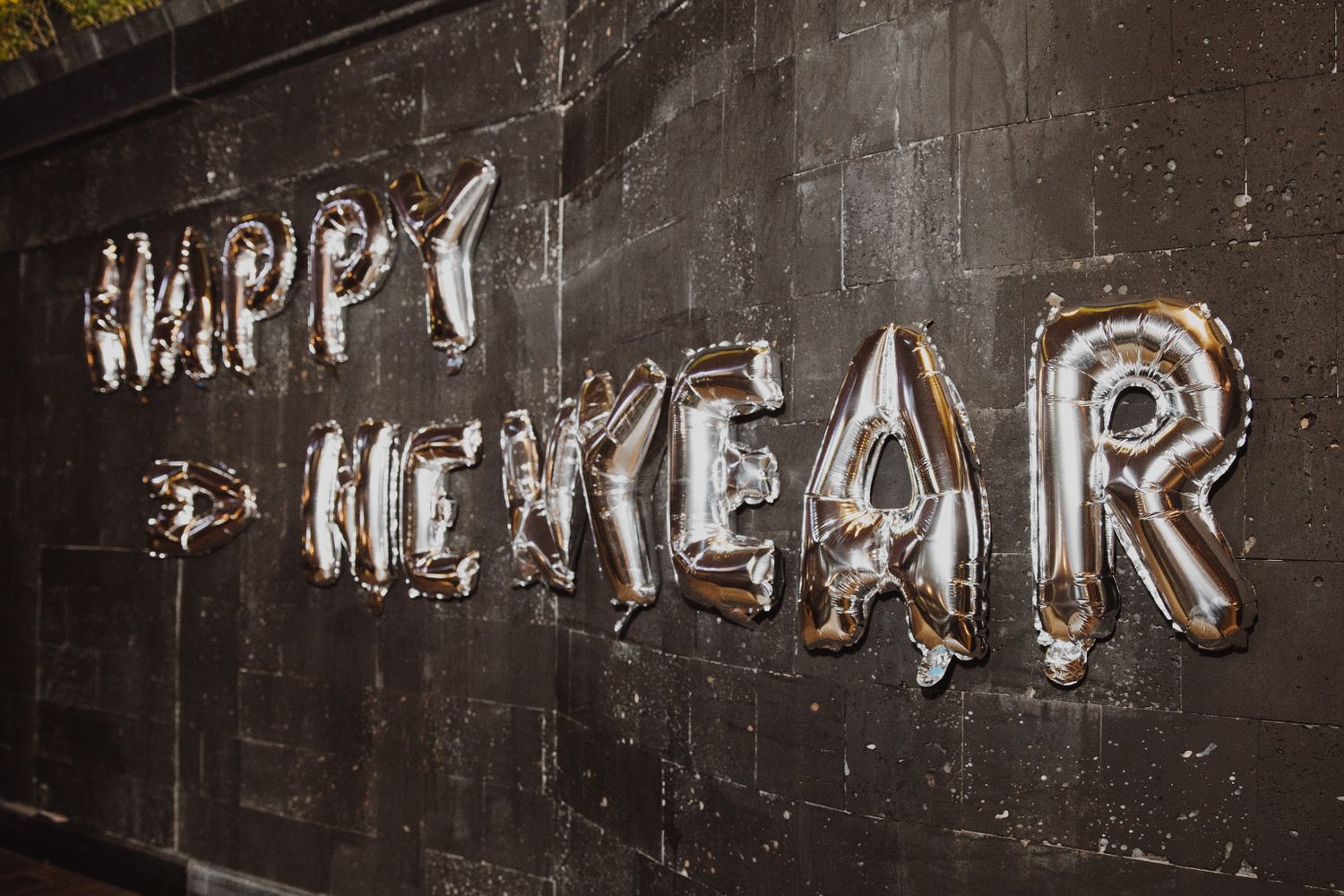
Cover photograph: Nguyen Hung / Pexels, Pexels License. Editorial photograph; pictured items are not Thread & Fest products.
New Year’s Eve party kits can be convenient, but a large box of hats, horns, balloons and banners is not automatically right for your gathering. A dinner for six needs different supplies from an open house for thirty. Start with the people and the room, then decide whether a kit or a few separate items will work better.
The cover photograph shows silver “Happy New Year” letter balloons on a dark wall. It is an example of a yearless photo setting, not a Thread & Fest product or a complete party kit.
Count guests before counting pieces
Write down the expected number of adults and children, then allow for a small number of late changes. A kit advertised for “25 guests” may count individual objects rather than complete sets for 25 people. Check the product contents: how many hats, noisemakers, glasses, cups or photo props are included? Divide by the number of people who might use each item.
Not every guest wants to wear a hat or use a noisemaker. If the party is a quiet dinner, spend the budget on table and lighting pieces rather than an oversized assortment of wearable props. For a lively countdown gathering, choose the items guests will actually pick up.
Separate the three jobs
Most party supplies serve one of three purposes. Room décor makes the space feel festive. Table items support food and drinks. Guest props are handled or worn. A single kit may mix these categories, so check whether you still need something practical after opening it.
For room décor, choose one visible area: an entry, the dining table or a photo wall. For table items, count place settings and servings. For props, leave a place where guests can take them voluntarily. This small plan prevents the common situation where the backdrop is elaborate but the table is crowded or the walkway is blocked.
Dated or yearless decorations?
Large year-number balloons make the date unmistakable in photographs, but they can be used only for that year. A “Happy New Year” banner, star garland, disco ball or metallic backdrop can be used again if its material survives storage. You can mix the two: one small date element with a reusable background.
Ask whether the dated pieces will actually appear in the photographs or be seen by guests. If they are hidden behind furniture, choose the yearless option. If you run a recurring event, label the reusable box with its setup photo so the next host knows what is already available.
Check setup time and space
Balloons need inflation and a plan for attaching them. A fringe curtain may be quick to hang but can cover an outlet, thermostat or door. A freestanding background needs floor space and a stable frame. Read the kit’s setup requirements before the day of the event, not while guests are arriving.
For a photo area, stand where the guests will stand and take a test image. Make sure the backdrop is wide enough for the group and that faces are lit from the front. If a small gathering does not have room for a photo wall, a neat table display may be more useful. Our Halloween backdrop guide explains the measuring method in more detail; the measurements apply to other celebrations too.
Pack for next year
When the party ends, separate reusable pieces from dated or damaged items. Dry and fold fabric, untangle lights, and keep clips or ties with the decorations they hold. Store a short contents list with the box, including the guest count it suited. You can then buy only what is missing next year.
Before ordering any kit, ask: What does one “piece” mean, which items will guests use, what setup is required, and which parts can be reused? A clear answer is more valuable than a photograph of a fully decorated room.
Sources and further reading
- Oriental Trading’s New Year’s Eve party supplies show how kits, backdrops and individual pieces can differ.
- Hobbycraft’s New Year’s Eve party ideas illustrate different setup choices for a gathering.